
41 Colors That Start With F: Names & Hex Codes

Colors that start with F cover a bold, energetic range. Fuchsia and Flame sit at one end, loud and saturated. Fawn and French Beige sit at the other, quiet and warm. Few letters swing this far between extremes.
This list only includes colors with a real, checkable source. That means CSS/X11 web standards, Crayola’s official naming, Pantone references, or long-documented traditional names. Every hex code here was cross-checked against at least two sources before it made the list.
That research turned up 41 real colors that start with F. Some lists online claim 50 or more. When we checked those extra names, several had no fixed hex code or came from unreliable fan-made color charts. Forty-one is what survives real cross-checking. Colors that start with F still form a rich, varied group, even at this honest count.
Quick Answer: Standout “F” Colors
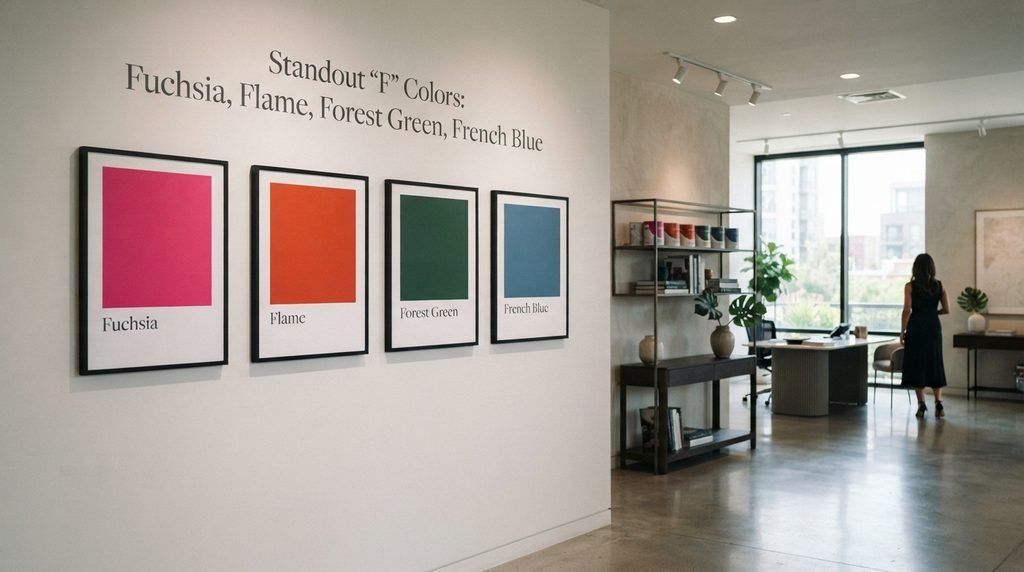
Short on time? Here are eight “F” colors worth knowing first. Fuchsia (#FF00FF) is a pure, electric pink-purple used across fashion and digital design. Flame (#E25822) offers a warm, saturated orange-red pulled straight from fire itself. Forest Green (#228B22) reads as deep, natural, and grounded.
Firebrick (#B22222) brings a muted, brick-toned red used in both architecture and branding. French Blue (#0072BB) gives a rich, confident blue tied to French design tradition. Fawn (#E5AA70) offers a warm, pale brown drawn from young deer coloring. Fulvous (#E48400) provides a tawny orange-brown, often used to describe bird feathers. Frostbite (#E936A7) delivers a bold, cold-toned pink despite its icy name. Each of these earns its spot through wide recognition, not alphabetical luck.
What “F” Colors Mean and Evoke
Color names carry emotional weight, and the “F” group leans toward heat, energy, and boldness more than most letters. Flame and Fire Engine Red both pull directly from combustion and urgency, making them natural fits for warning signs and high-visibility design. Fuchsia carries a different kind of intensity, tied more to confidence and modern fashion than danger.
Forest Green and Fern Green both suggest calm and stability, borrowing directly from nature rather than emotion. Fawn and French Beige lean gentle and understated, common in interiors where a loud color would feel out of place. Firebrick sits somewhere between these extremes, warm and grounded rather than alarming.
French Violet and French Lilac both carry a sense of quiet sophistication, tied loosely to French design and fashion history.
Color Families: Where “F” Colors Belong

Reds and Warm Oranges
Falu Red, Ferrari Red, Fiery Rose, Firebrick, Fire Engine Red, Fire Opal, Folly, and Flame anchor this warm, high-energy family. Falu Red carries deep historical roots, tied to Swedish building paint traditions. Ferrari Red and Fire Engine Red both push toward maximum saturation, built for speed and urgency. Firebrick stays more muted and brick-toned, while Flame and Fire Opal both lean orange rather than pure red.
Pinks and Magentas
This is the largest family in the “F” group. Fandango, Fandango Pink, Fashion Fuchsia, Flamingo Pink, Flirt, Frostbite, Fuchsia, and several French-named pinks all live here. Fuchsia stays the purest and most saturated, while Flamingo Pink softens things considerably. Fandango and Fandango Pink share a name but differ in intensity, and the French-named entries like French Rose and French Pink both stay soft and romantic rather than bold.
Browns and Neutrals
Fallow, Fawn, Field Drab, French Beige, French Bistre, and Floral White cover this quieter family. Fallow is one of the oldest recorded color names in English, dating back roughly a thousand years. Fawn and French Beige both stay warm and pale, while Field Drab and French Bistre lean darker and more muted, closer to true brown.
Yellows
Flavescent, Flax, and Fulvous make up this smaller group. Flavescent describes a soft, pale yellow, often used to describe plants turning color. Flax pulls from the actual plant fiber, while Fulvous leans more orange-brown, historically used to describe bird plumage.
Greens
Fern Green and the three Forest Green variants (Crayola, Traditional, and Web) anchor this family, alongside the military-toned Feldgrau. Fern Green stays bright and natural, while Forest Green (Traditional) is noticeably darker than its Crayola and Web counterparts. Feldgrau sits apart from the others, a muted gray-green historically tied to European military uniforms.
Blues
Fluorescent Blue, French Blue, and French Sky Blue cover this smaller but distinct family. Fluorescent Blue reads as bright and electric, built for high-visibility use. French Blue stays rich and confident, while French Sky Blue softens into a lighter, more approachable tone.
Purples
French Lilac and French Violet round out this family. French Lilac stays soft and muted, while French Violet pushes toward a much bolder, more saturated purple.
Design & Branding Favorites
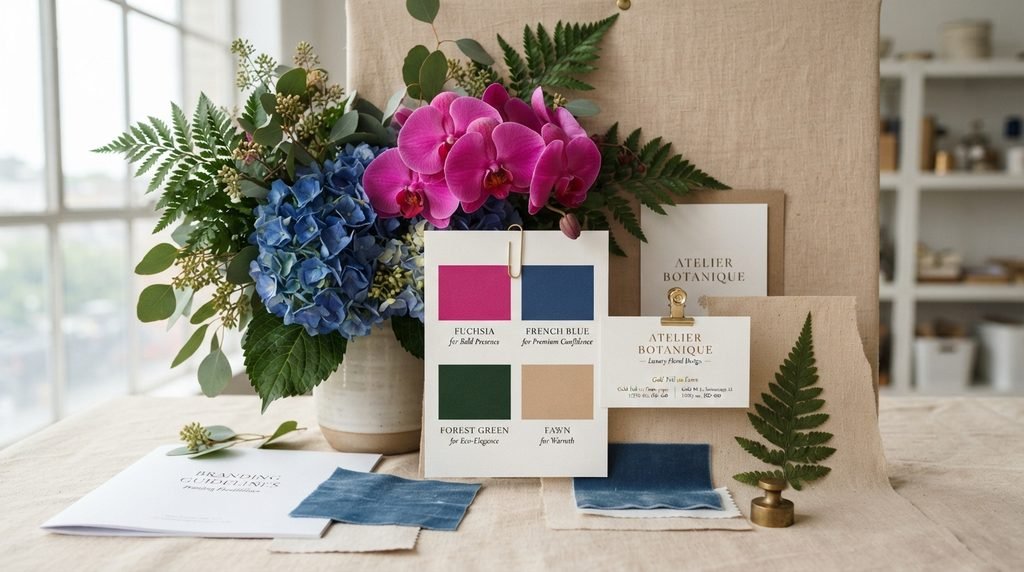
Certain “F” colors show up constantly in branding work. Fuchsia dominates fashion and beauty branding, chosen specifically for its bold, unmistakable presence. French Blue appears often in premium and lifestyle branding, borrowing a sense of confidence from its French design associations. Forest Green (Web) remains a go-to choice for eco-focused and outdoor branding.
Below is a quick reference for how four of these colors typically get used in real design work. Notice how the saturated entries lean toward bold, attention-grabbing branding, while the muted entries lean toward calm, natural design.
| Color | Hex | Typical Use |
| Fuchsia | #FF00FF | Fashion, beauty branding |
| French Blue | #0072BB | Premium, lifestyle branding |
| Forest Green (Web) | #228B22 | Eco, outdoor branding |
| Fawn | #E5AA70 | Warm interior, natural branding |
Fuchsia and Forest Green rarely appear together in the same palette, since one is built for energy and the other for calm. Fawn works well as a supporting neutral for almost any of the bolder “F” colors, since its warmth softens harsher tones without competing with them.
Fashion & Beauty Shades
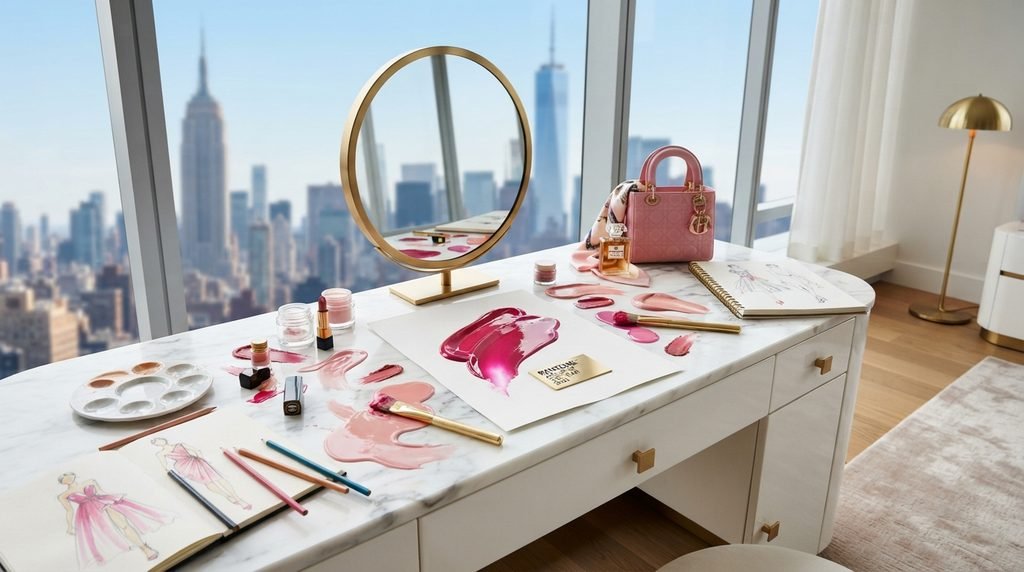
Fashion leans heavily on several “F” names. Fuchsia remains one of the most requested colors in both clothing and cosmetics, valued for reading as confident rather than aggressive. Flamingo Pink shows up constantly in soft, playful collections, drawing its name and tone directly from the bird. French Rose and French Pink both carry a romantic, vintage quality that pairs naturally with bridal and soft seasonal fashion.
Fuchsia Rose deserves a mention here too, since it was named Pantone’s Color of the Year in 2001, a rare distinction that pushed it from a general color name into a genuine fashion milestone. That kind of recognition is part of why certain “F” colors stay in steady rotation across multiple fashion seasons rather than fading after one trend cycle.
Nature-Inspired Names
Several “F” colors borrow directly from the natural world. Fawn takes its name from young deer, capturing that same soft, warm brown. Flax pulls straight from the plant fiber, while Fern Green borrows its bright, true green from the plant itself. Flame and Fire Opal both reference combustion and mineral color respectively, connecting back to genuinely natural sources despite feeling almost synthetic in tone.
Forest Green, in all three of its documented variants, remains the clearest nature-to-color connection in this entire letter group. Fulvous closes out this group with a more academic nature reference, historically used by ornithologists to describe the tawny, brownish-orange feathers seen on certain bird species.
Rare or Unusual “F” Color Names
Some “F” colors rarely surface outside specialist circles, but each has a real story behind it. Falu Red carries genuine architectural history, originating from copper mine tailings in Falun, Sweden, and still used today to paint traditional Scandinavian farmhouses. Feldgrau, meaning “field gray” in German, was the actual uniform color used by German military forces for much of the 20th century.
Fulvous rarely appears outside ornithology and historical color writing, despite being a real, documented color term dating back to 1664. Frostbite, despite sounding like a purely descriptive medical term, is an official Crayola color name for a bold, cold-toned pink, first introduced as part of a themed crayon set. Each of these names shows that “obscure” in the “F” family usually means “historically or scientifically specific,” not “made up.”

- Falu Red (#801818) — traditional Swedish farmhouse paint color
- Feldgrau (#4D5D53) — historic German military uniform gray-green
- Fulvous (#E48400) — ornithological term for tawny bird plumage
- Frostbite (#E936A7) — official Crayola name for a bold pink
These four sit at the edge of common knowledge, but each one has a stable, checkable source. That’s what separates a genuinely rare color name from a vague one that different sites define inconsistently.
Colors Easily Confused With Each Other

A few “F” pairs trip people up constantly. Fandango and Fandango Pink share a root name but differ noticeably in intensity, since Fandango Pink runs lighter and more accessible while plain Fandango stays deeper and more saturated. Forest Green causes confusion in a different way, since its Crayola, Traditional, and Web versions all carry different hex codes despite sharing the exact same name.
| Color A | Hex A | Color B | Hex B | Key Difference |
| Fandango | #B53389 | Fandango Pink | #DE5285 | Fandango Pink is lighter and more accessible |
| Forest Green (Traditional) | #014421 | Forest Green (Web) | #228B22 | Web version is noticeably brighter |
| Fuchsia | #FF00FF | Fuchsia Rose | #C74375 | Fuchsia Rose is muted, dustier |
| Firebrick | #B22222 | Falu Red | #801818 | Falu Red carries more brown undertone |
Forest Green (Traditional) versus Forest Green (Web) is the clearest example on this list of a single name spanning very different intensities, which matters most for anyone specifying a color without naming the exact standard. Fuchsia versus Fuchsia Rose matters most in fashion and cosmetics, where the wrong choice can shift a look from bold and electric to soft and vintage.
Master Alphabetical List of “F” Colors
This list includes standard CSS/X11 names, Crayola-official names, Pantone references, and long-documented traditional and historical names. Standard CSS/X11 names are marked with an asterisk, since those carry a single, universally agreed hex code. Every other name below is still verified against its cited source, though minor variation can exist across informal color-naming sites.
- Fallow — #C19A6B
- Falu Red — #801818
- Fandango — #B53389
- Fandango Pink — #DE5285
- Fashion Fuchsia — #F400A1
- Fawn — #E5AA70
- Feldgrau — #4D5D53
- Fern Green — #4F7942
- Ferrari Red — #FF2800
- Field Drab — #6C541E
- Fiery Rose — #FF5470
- Firebrick* — #B22222
- Fire Engine Red — #CE2029
- Fire Opal — #E95C4B
- Flame — #E25822
- Flamingo Pink — #FC8EAC
- Flavescent — #F7E98E
- Flax — #EEDC82
- Flirt — #A2006D
- Floral White* — #FFFAF0
- Fluorescent Blue — #15F4EE
- Folly — #FF004F
- Forest Green (Crayola) — #5FA777
- Forest Green (Traditional) — #014421
- Forest Green (Web)* — #228B22
- French Beige — #A67B5B
- French Bistre — #856D4D
- French Blue — #0072BB
- French Fuchsia — #FD3F92
- French Lilac — #86608E
- French Pink — #FD6C9E
- French Rose — #F64A8A
- French Sky Blue — #77B5FE
- French Violet — #8806CE
- Frostbite — #E936A7
- Fuchsia* — #FF00FF
- Fuchsia (Crayola) — #C154C1
- Fuchsia Purple — #CC397B
- Fuchsia Rose — #C74375
- Fulvous — #E48400
- Fuzzy Wuzzy — #CC6666
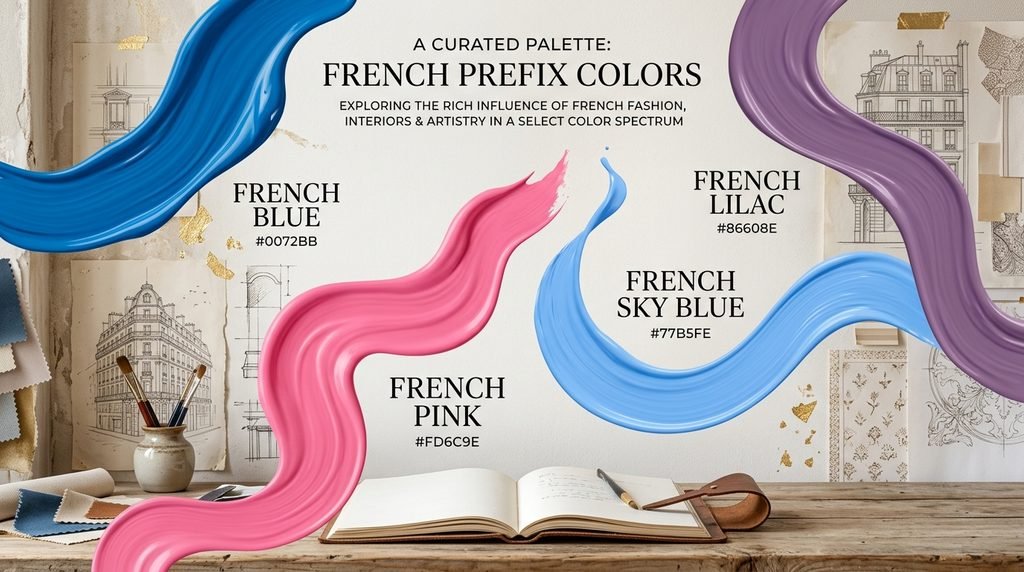
Notice how many entries carry “French” as a prefix, more than any other modifier in this letter group. That pattern reflects a long tradition in color naming of crediting French fashion and design history, even for colors with no direct connection to France itself.
Hex/RGB Crosswalk: Why Exact Codes Matter

A color name alone isn’t enough for real design work. Two designers using “fuchsia” without a hex code might still agree, since Fuchsia is a fixed CSS standard, but softer names like “flame” or “fawn” can shift noticeably between sources. That’s why any serious project needs the exact hex or RGB value locked in before production starts.
Hex codes matter most for web and app design, since browsers read hex values directly. RGB values matter more for video, screen graphics, and design software that calculates color mathematically. The table below gives both formats for five of the most frequently searched “F” colors, so you can copy whichever your tool requires.
| Color | Hex | RGB |
| Fuchsia | #FF00FF | 255, 0, 255 |
| Flame | #E25822 | 226, 88, 34 |
| Forest Green (Web) | #228B22 | 34, 139, 34 |
| French Blue | #0072BB | 0, 114, 187 |
| Firebrick | #B22222 | 178, 34, 34 |
Fuchsia’s RGB values show a maxed-out red and blue channel paired with zero green, which is exactly what gives it that flat, electric intensity. Firebrick, by contrast, keeps all three channels relatively close together and low, producing its muted, brick-like depth instead of anything bright or saturated.
Full Comparison Table: All 41 “F” Colors
This table brings every color from the alphabetical list together with hex, RGB, color family, and common use. Use the family column to quickly find colors that will sit well together in a single palette, and use the common use column to match a color to your actual project type.

| Color | Hex | RGB | Family | Common Use |
| Fallow | #C19A6B | 193, 154, 107 | Brown | Historic neutral, interiors |
| Falu Red | #801818 | 128, 24, 24 | Red | Traditional architecture accent |
| Fandango | #B53389 | 181, 51, 137 | Pink/Purple | Bold fashion accent |
| Fandango Pink | #DE5285 | 222, 82, 133 | Pink | Soft fashion accent |
| Fashion Fuchsia | #F400A1 | 244, 0, 161 | Pink | Bold beauty branding |
| Fawn | #E5AA70 | 229, 170, 112 | Brown | Warm interior neutral |
| Feldgrau | #4D5D53 | 77, 93, 83 | Green/Gray | Historic military reference |
| Fern Green | #4F7942 | 79, 121, 66 | Green | Natural, outdoor branding |
| Ferrari Red | #FF2800 | 255, 40, 0 | Red | Automotive, high-energy branding |
| Field Drab | #6C541E | 108, 84, 30 | Brown | Muted utility neutral |
| Fiery Rose | #FF5470 | 255, 84, 112 | Pink/Red | Bold energetic accent |
| Firebrick | #B22222 | 178, 34, 34 | Red | Architecture, brand accent |
| Fire Engine Red | #CE2029 | 206, 32, 41 | Red | High-visibility branding |
| Fire Opal | #E95C4B | 233, 92, 75 | Red/Orange | Warm gemstone-inspired accent |
| Flame | #E25822 | 226, 88, 34 | Orange/Red | Bold energetic branding |
| Flamingo Pink | #FC8EAC | 252, 142, 172 | Pink | Playful, soft branding |
| Flavescent | #F7E98E | 247, 233, 142 | Yellow | Soft pastel accent |
| Flax | #EEDC82 | 238, 220, 130 | Yellow | Natural fiber-inspired tone |
| Flirt | #A2006D | 162, 0, 109 | Pink/Purple | Bold cosmetics branding |
| Floral White | #FFFAF0 | 255, 250, 240 | Neutral | Soft background tone |
| Fluorescent Blue | #15F4EE | 21, 244, 238 | Blue | High-visibility, digital branding |
| Folly | #FF004F | 255, 0, 79 | Red/Pink | Bold, attention-grabbing accent |
| Forest Green (Crayola) | #5FA777 | 95, 167, 119 | Green | Friendly outdoor branding |
| Forest Green (Traditional) | #014421 | 1, 68, 33 | Green | Broad formal green accent |
| Forest Green (Web) | #228B22 | 34, 139, 34 | Green | Eco, outdoor branding |
| French Beige | #A67B5B | 166, 123, 91 | Brown | Interior, fashion neutral |
| French Bistre | #856D4D | 133, 109, 77 | Brown | Muted vintage accent |
| French Blue | #0072BB | 0, 114, 187 | Blue | Premium lifestyle branding |
| French Fuchsia | #FD3F92 | 253, 63, 146 | Pink | Bold fashion accent |
| French Lilac | #86608E | 134, 96, 142 | Purple | Soft sophisticated accent |
| French Pink | #FD6C9E | 253, 108, 158 | Pink | Romantic, bridal accent |
| French Rose | #F64A8A | 246, 74, 138 | Pink | Vintage fashion accent |
| French Sky Blue | #77B5FE | 119, 181, 254 | Blue | Soft, approachable branding |
| French Violet | #8806CE | 136, 6, 206 | Purple | Bold luxury accent |
| Frostbite | #E936A7 | 233, 54, 167 | Pink | Bold cosmetics branding |
| Fuchsia | #FF00FF | 255, 0, 255 | Pink/Purple | Fashion, beauty branding |
| Fuchsia (Crayola) | #C154C1 | 193, 84, 193 | Pink/Purple | Playful crayon-toned accent |
| Fuchsia Purple | #CC397B | 204, 57, 123 | Pink/Purple | Bold formal accent |
| Fuchsia Rose | #C74375 | 199, 67, 117 | Pink | Pantone fashion reference |
| Fulvous | #E48400 | 228, 132, 0 | Orange/Brown | Nature, wildlife reference |
| Fuzzy Wuzzy | #CC6666 | 204, 102, 102 | Red/Brown | Warm muted accent |
A few rows deserve a second look. The three Forest Green variants together show how much a single name can shift depending on which organization defines it, ranging from a friendly mid-tone to a very deep, formal shade.
Decision-Flow Table: Picking the Right “F” Color
Choosing between forty-one similar-sounding names gets easier with a clear project goal in mind. The table below matches common use cases to a recommended “F” color, so you can skip the guesswork and go straight to a shade that fits the job.

| If you need… | Pick this color | Why |
| A bold fashion or beauty brand | Fuchsia or Fashion Fuchsia | Unmistakable, confident, high-energy |
| A premium or lifestyle brand | French Blue | Rich, confident, established |
| A natural or eco-focused brand | Forest Green (Web) or Fern Green | Grounded, calm, nature-linked |
| A warm, neutral interior palette | Fawn or French Beige | Soft, warm, versatile |
| A high-visibility safety design | Fire Engine Red or Fluorescent Blue | Impossible to miss |
| A romantic or bridal palette | French Pink or French Rose | Soft, vintage-leaning warmth |
| A historic or traditional design project | Falu Red or Feldgrau | Rooted in real architectural or military history |
Use this table as a starting point rather than a final answer. A brand built entirely around Fuchsia, for instance, often benefits from a neutral like Floral White or Fawn alongside it to keep the palette from feeling overwhelming. Pair the recommended color with one neutral from the comparison table above for a balanced result.
Conclusion
Colors that start with F swing between two extremes, from the electric intensity of Fuchsia to the quiet warmth of Fawn. This list sticks to 41 verified names with real hex and RGB codes, so nothing here is guesswork or padding. Whether you’re building a brand, mixing paint, or just curious, these colors that start with F give you a solid, checkable starting point.
Frequently Asked Questions
How many colors actually start with the letter F?
This guide covers 41 verified colors with confirmed hex and RGB codes, drawn from CSS/X11, Crayola, Pantone, and documented historical sources. That number reflects genuine research rather than rounding up to a bigger, less accurate figure.
What are some common colors that start with F?
Fuchsia, Flame, Forest Green, Firebrick, and French Blue are among the most recognized. Each has a fixed hex code and shows up regularly in design, fashion, and branding.
Is Fuchsia a real CSS color?
Yes. Fuchsia is a standard CSS/X11 color with the hex code #FF00FF, and it’s identical in value to the color Magenta despite the different name.
What’s the difference between the three Forest Green colors?
Forest Green (Traditional) is the darkest at #014421, Forest Green (Web) sits in the middle at #228B22, and Forest Green (Crayola) is the lightest and friendliest at #5FA777. All three share the same name but come from different standards.
What color is Falu Red exactly?
Falu Red is a deep, brick-toned red with the hex code #801818, historically used to paint traditional wooden houses in Sweden using pigment from copper mine waste.
Is Feldgrau a shade of gray or green?
Feldgrau is technically a muted gray-green, hex #4D5D53, historically tied to German military uniform color rather than any fashion or design origin.
What’s the difference between Fuchsia and Fuchsia Rose?
Fuchsia (#FF00FF) is bright and electric, while Fuchsia Rose (#C74375) is far more muted and dusty. Fuchsia Rose was also notably named Pantone’s Color of the Year in 2001.